
All articles
Share

Developing and Implementing Cross-Channel HTDR Correlation

Detection & Correlation
February 10, 2026
Humanix
Title
SHARE
SHARE
SHARE

What is feature engineering

In practice, feature engineering is both science and a bit of witchcraft. It often involves both iteration and experimentation to uncover hidden patterns and relationships within the data. For instance, a data scientist might transform raw sales data into features such as average purchase value, purchase frequency, or customer lifetime value, which can significantly boost the performance of a churn prediction model. By thoughtfully engineering features, practitioners can provide machine learning models with the most informative inputs, ultimately leading to better accuracy and more robust predictions.

What’s more?

  • Incorporate more and more data sources
  • Feature engineering platform

What is data engineering

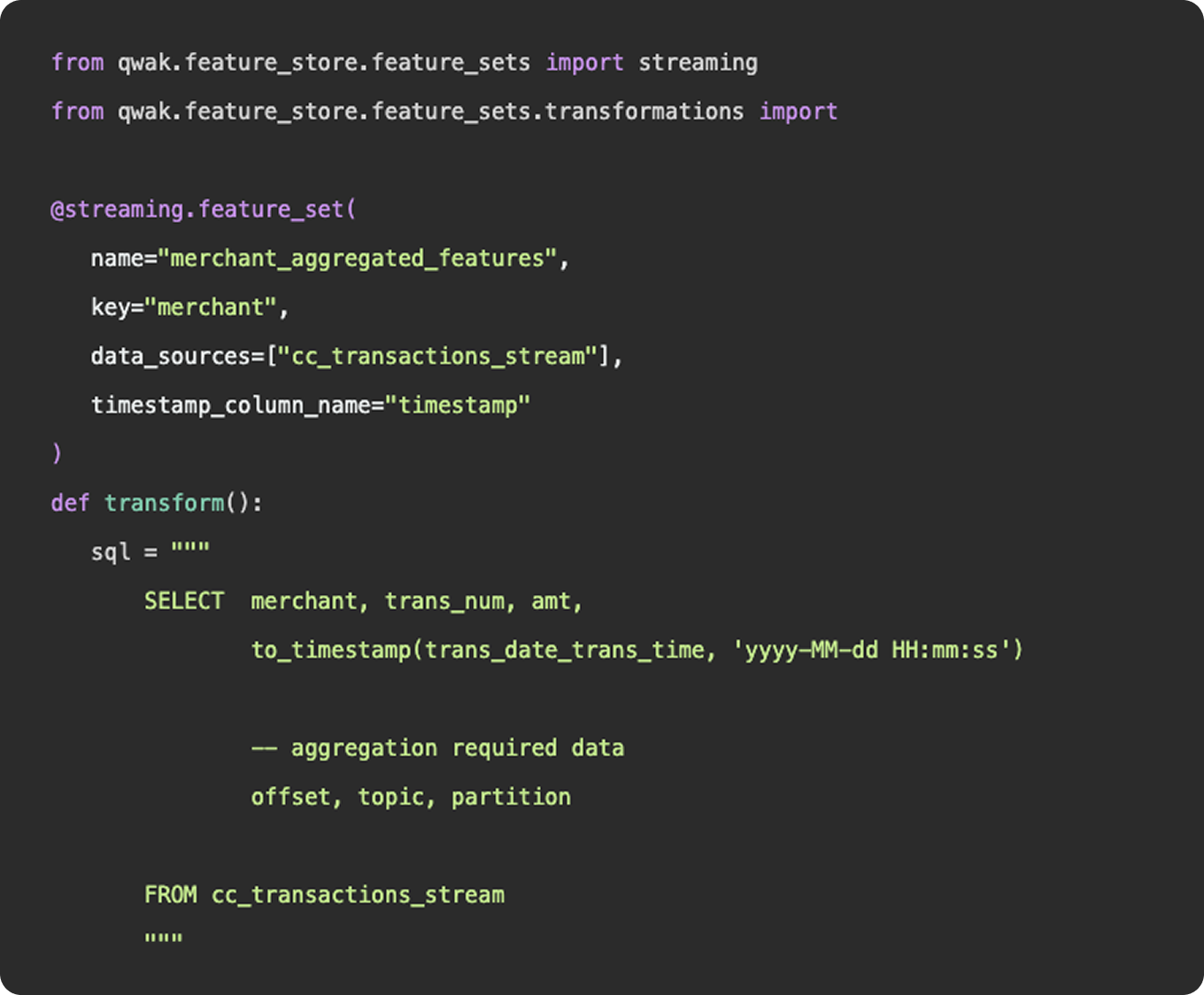
As we mentioned above, feature engineering is certainly a subset of data engineering. It involves the ingestion of data from a source, applying a series of transformations, and making the final result available to be queried by a model for training purposes. You can construct feature engineering pipelines to resemble data engineering pipelines, having schedules, specific source and sink destinations, and availability for querying. However, this configuration would only really apply once you have surpassed the experimentation stage and determined a need for a consistent flow of new feature data.

What is feature engineering

Image description

1. Functions

Functionally, there is nothing to differentiate data vs features - data points (link). Where feature engineering and data engineering really differ is in the objectives and motivations for constructing the pipelines. In general, data engineering serves a broader, more unified purpose than feature engineering. Data engineering platforms are constructed to be flexible and universal, ingesting various types and sources of data into a unified storage location where any number of transformations and use cases can be applied. The intent of a well constructed fact table or gold layer in a data lake is to provide a single source of truth that answers many different questions, produces many reports, and can be consumed by many downstream customers.

2. Practise

And in practice, an organization’s data engineering team will be responsible for the curation and maintenance of all data pipelines, not just those that relate to machine learning. These pipelines may power BI dashboards used by C-Suite, auditing reports that feed payroll, or event logs that show a user’s history of actions within the application.

Feature engineering, on the other hand, serves a specific purpose, finding the tailored inputs and columns that will generate the best predictive results for a machine learning model. Data scientists and machine learning engineers are not tasked with developing a universal data model that will ingest all data points throughout an organization, they just need to select, curate, and clean the data needed to power their models.

3. Machine learning

Now, as machine learning teams grow and begin to incorporate more and more data sources into their models, their feature engineering platform may start to resemble a larger data engineering platform in the tools and methodologies they employ. But, the intent is not to establish flexible data models that can be used throughout the organization - it is simply to power their machine learning models.

Why Single-Channel Monitoring Creates Blind Spots

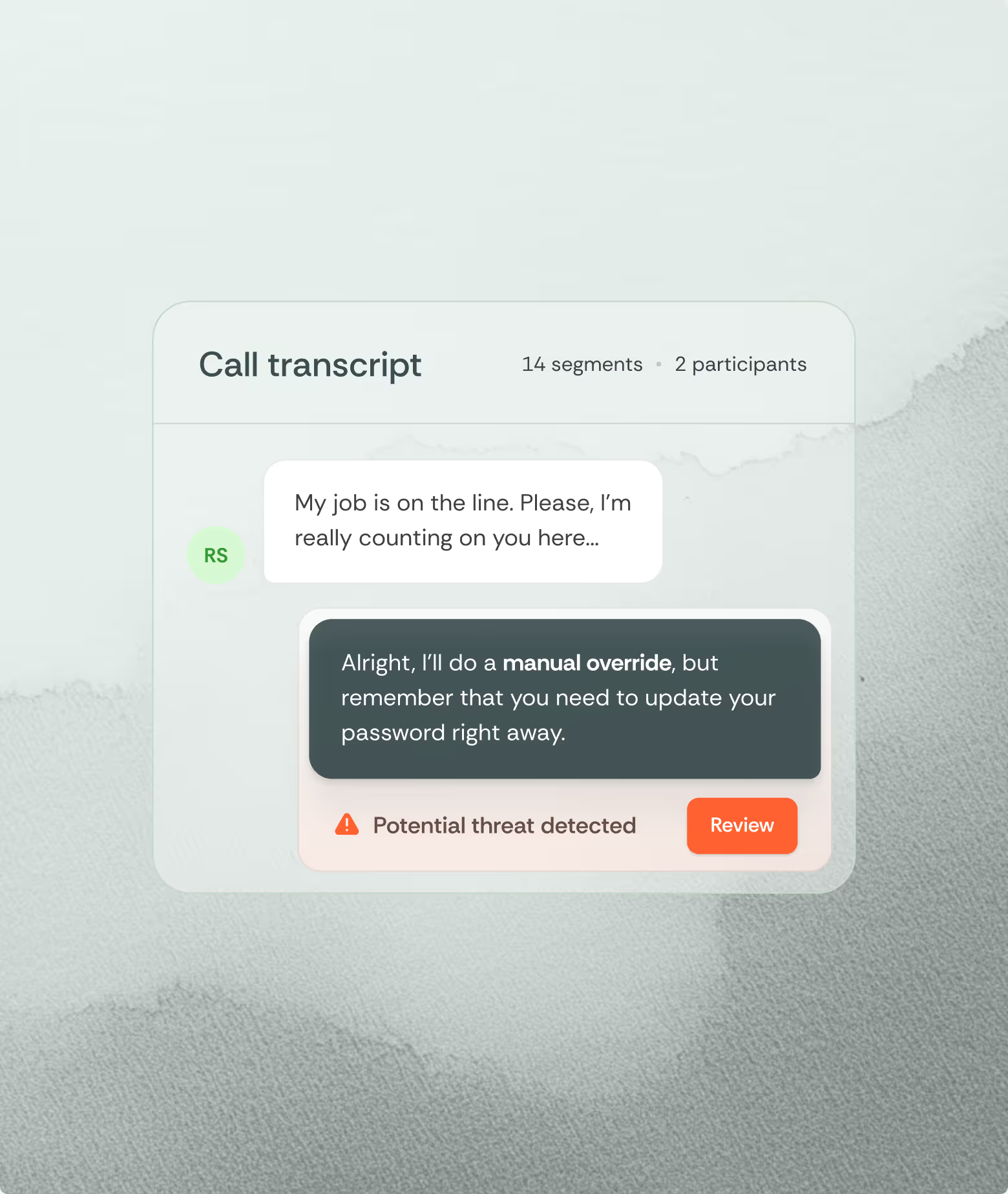
Security architectures monitor communication channels in isolation. Email gateways scan for phishing. SMS filters block spam. Phone systems log calls. Most do not examine the content.

Each tool excels within its channel but remains blind to the others. Attackers exploit these silos deliberately, fragmenting their attacks across multiple channels to evade detection.

It's a playbook. Each touchpoint reinforces the others, building a narrative that seems legitimate precisely because it spans multiple channels. Security teams see fragments while attackers execute complete campaigns.

Correlation Patterns That Expose Coordinated Attacks

Cross-channel attacks create distinctive patterns. Temporal clustering- multiple channels targeting the same user within hours are the most reliable. Email, SMS, and voice converging on one individual indicates coordinated social engineering.

Content consistency across channels reveals coordination. Attackers maintain narrative coherence, referencing the same account numbers, incident tickets, or project names across different communications. Natural language processing can identify these connections, flagging when disparate channels tell the same fabricated narrative.

Behavioral patterns provide additional signals. Normal business communication rarely requires simultaneous multi-channel contact with escalating urgency. When intensity increases across channels the progression itself indicates manipulation rather than legitimate escalation.

Implementing Cross-Channel Correlation

Audit current visibility. Most organizations comprehensively log email but have minimal voice and SMS data. Language is an invaluable source of information, yet it remains largely neglected in security monitoring.

Attackers exploit these exact gaps. Complete visibility across all communication channels enables the correlation necessary to detect coordinated attacks.

Centralize communication logs in your SIEM. Normalize formats, synchronize timestamps, map identities. This enables correlation rules detecting multi-channel sequences targeting specific users.

Deploy correlation rules that flag suspicious patterns. Alert when users receive contact across three or more channels within 24 hours. Escalate when multi-channel communication precedes authentication attempts, password resets, or MFA prompts. These rules transform isolated events into visible attack campaigns.

Human Threat Detection and Response platforms purpose-built for communication analysis automate this correlation using AI to identify temporal patterns, detect narrative consistency across channels through natural language processing, and flag urgency escalation sequences that manual analysis would miss.

Recommended Actions

Immediate steps: Map communication channels currently feeding security monitoring. Create basic SIEM rules for multi-channel sequences within 4-hour windows.

Implementation resources:

  • MITRE ATT&CK techniques,
  • NIST Cybersecurity Framework detection guidelines,
  • Open-source SIEM templates,
  • HTDR platforms,
  • ISACs for campaign indicators.

Critical enhancement: Establish real-time alerting when high-value targets (executives, administrators, finance) receive multi-channel contact. These individuals warrant immediate verification regardless of message content.

Cross-channel correlation transforms security architecture from channel-specific monitoring to comprehensive campaign detection. Organizations that connect these dots detect sophisticated social engineering that single-channel defenses will always miss.


Enter your work email and we'll reach out to schedule the demo

Oops! Something went wrong while submitting the form.