When a Quick Fix Creates Insecurity: How ClickFix Turns Familiar Interfaces Against Users


ClickFix attacks demonstrate how attackers exploit the vulnerabilities in social and technical systems of organizational attack surfaces
The attacks are quick and bypass systems that took years to secure.
Since 2023, ClickFix has turned what seems like helping into harm. Microsoft has attributed 47% of its Defender Experts initial-access cases in 2025 to the technique.
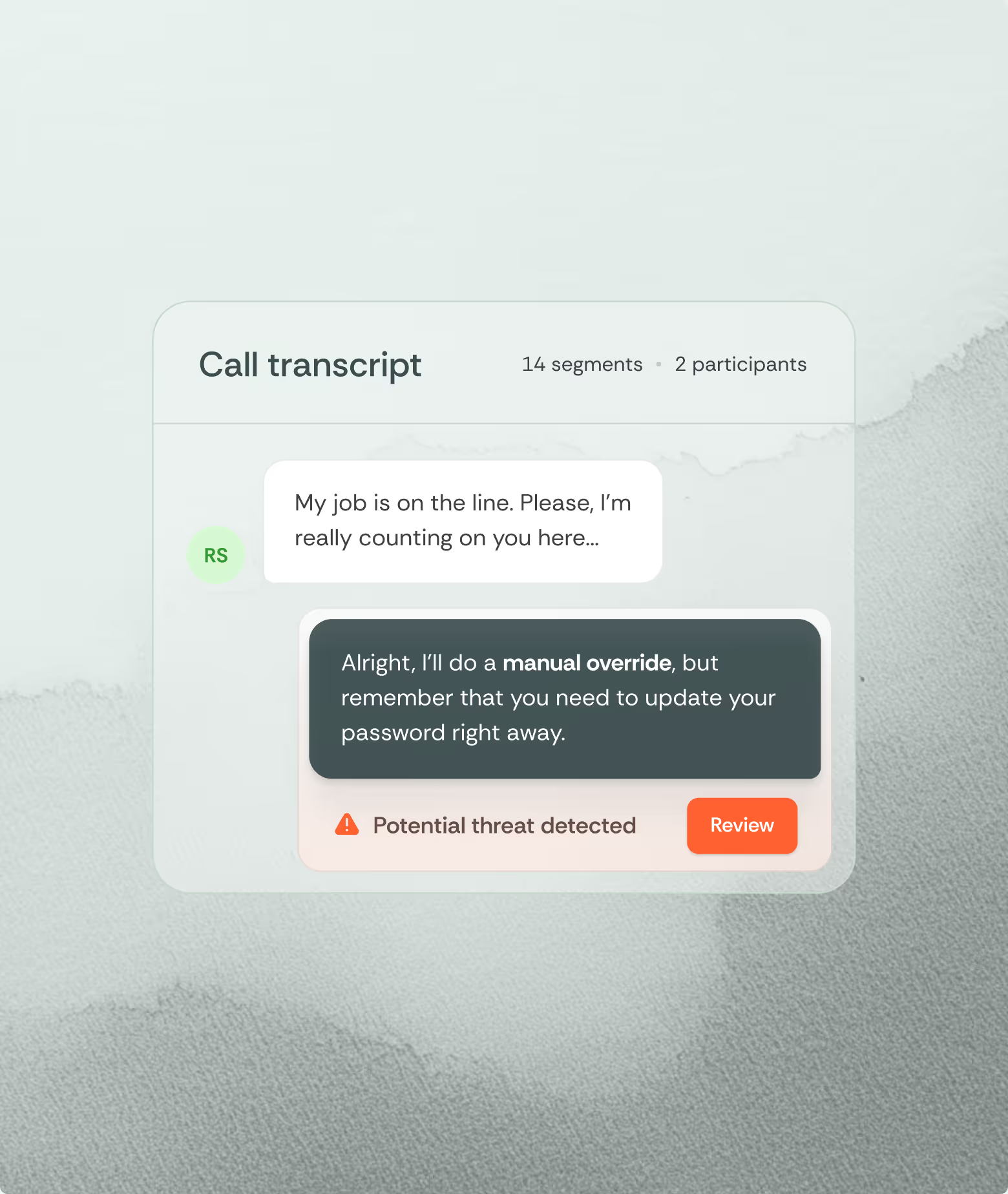
Although ClickFix is the basic strategy for help desk attacks and employee impersonation, the attack turns what appears to be a fix into a series of small steps that break a system. Attackers are compromising legitimate websites or using SEO poisoning to create illegitimate browser errors, deceiving users into copying and pasting malicious commands into their own run dialogs or terminals.
The bypass is widely regarded as technically elegant, focusing on payloads and infrastructure. Why it has succeeded in tricking users has gone relatively unexamined. No technology functions without a human agent perceiving it correctly, or fails by neglecting its limitations. It fails when perception becomes a habitual response. Whether we look at enterprise or consumer solutions, protecting users requires that we focus on the functional units attackers are exploiting: design affordances. In ClickFix, the attacker copies a familiar interface and routes the user into a trusted operating-system tool.
Why affordances are exploitable
In design theory, an affordance bridges the properties of a technology with the capabilities of the user. No matter how knowledgeable the user, if they do not perceive affordances then the design fails. We see this in the SOC: if analysts find detection products or their SIEM integrations unwieldy, they will stop using them. No matter how good the lock, it will not create security if people do not close it.
Much cybersecurity reporting undervalues this layer. Focusing on a CVE or a patch describes the technical side of an affordance without describing how users make it work or adversaries exploit it. The common claim that humans are the weakest link gets the relationship backward. A technology does not work without a person perceiving its properties correctly. Perception is not a vulnerability. It determines the security of a system.
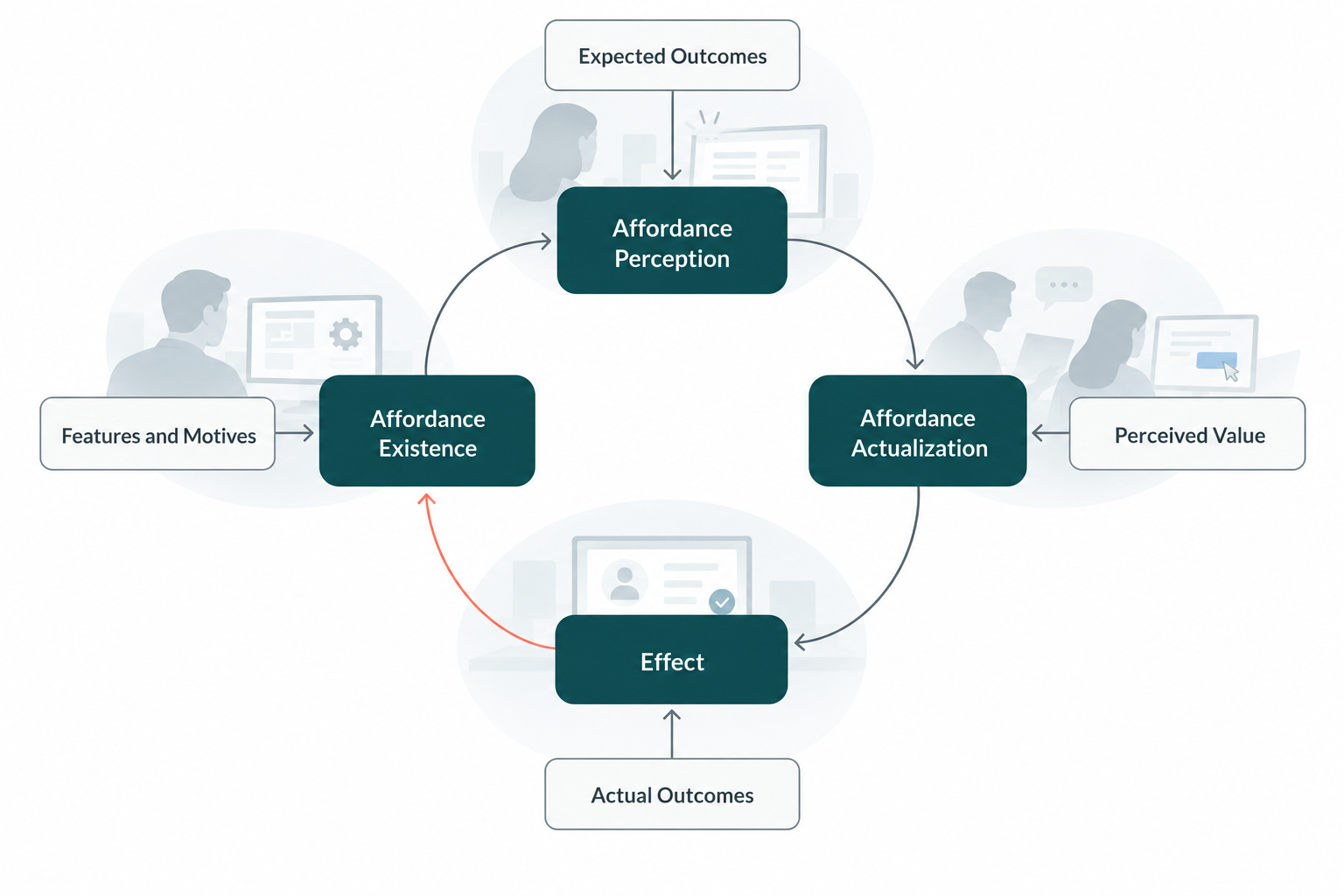
Figure 1. Designers might want users to see certain functional features (affordances), but users will discover their own. This can negatively impact workflows and create technical and psychological debt that can be exploited.
How CAPTCHAs capture our trust, not our thoughts
A CAPTCHA exists to discriminate between two states: a human visitor and an automated one. Years of routine use have given the checkbox a second meaning: safety. Passing the check feels like crossing into a safe, verified space. Once a visitor recognizes the gate, deliberate evaluation switches off and can shift to more important tasks, a pattern known as verification fatigue. Each successful completion reinforces the response, but there is no indication of an error. For instance, a user presented with five prompts every day completes about 1,800 repetitions a year. When an attacker hides one new link in this automated chain, it will go unnoticed.
ClickFix pages depend on normal functionality rather than a technical flaw. Once that control is passed, the attacker substitutes a new sequence: a clipboard write, then an instruction to paste into the Run dialog or a terminal and press Enter. The appearance remains, but the security affordances are removed.
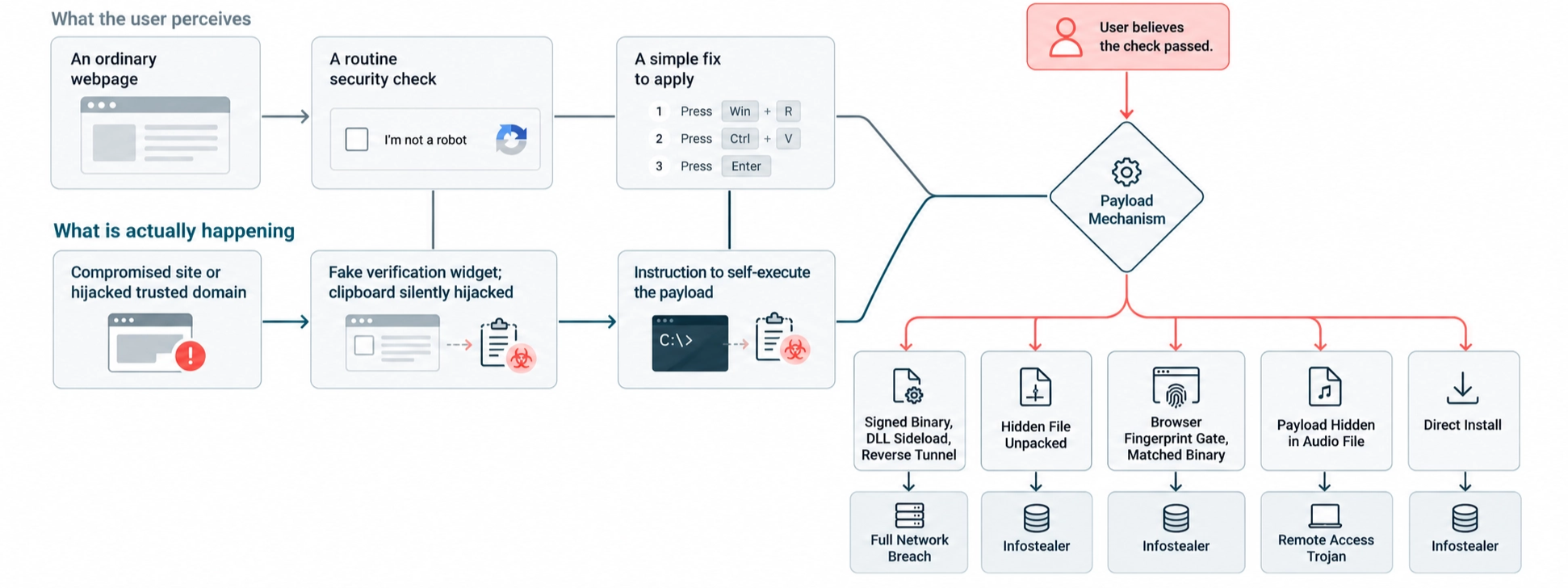
Figure 2. ClickFix works by replacing a familiar verification step with a clipboard write and a paste instruction.
When fluency is the signal, fight the flow with friction
The fake interface also sends the user out of the browser into a trusted operating-system tool. CTM360 describes this transition such that the user brings the command from the browser's sandbox into a system shell. In the age of generative AI, such actions are also commonplace. CTM360 also found that researchers and crawlers see a clean page while the lure can be seen by the target.
Trained security personnel can sometimes catch this substitution because they have the right mental model of what a sequence should look like. Most employees do not. They rely instead on the general knowledge that training provides. Security awareness training was not designed to catch these cues. Instead, the rote thinking it can promote can reinforce the beliefs that social engineering attacks exploit. With minimal effort, no error signals, and no sign of risk, users will believe that the fix worked.
Table 1. Design solutions to cognitive vulnerability.
A new security paradigm is needed, one that makes clear the connections between people and technology, one that recognizes that social engineering has been adopted because people are inextricably linked to the systems. The introduction of agentic systems will only shift the security debt from the social sphere, further into the technical.
What ClickFix demonstrates is that this gap is not abstract. The technique succeeds specifically because it brings human factors and technology design together, exploiting the exact affordances that connect people to their systems. Closing that gap means designing policies and procedures around those affordances directly rather than around generic awareness. Behavioral nudges and training both help, but only briefly. A nudge wears off after a few repetitions, and training can teach the basic shape of an attack without preparing someone for every situation it might take.
What is feature engineering
In practice, feature engineering is both science and a bit of witchcraft. It often involves both iteration and experimentation to uncover hidden patterns and relationships within the data. For instance, a data scientist might transform raw sales data into features such as average purchase value, purchase frequency, or customer lifetime value, which can significantly boost the performance of a churn prediction model. By thoughtfully engineering features, practitioners can provide machine learning models with the most informative inputs, ultimately leading to better accuracy and more robust predictions.
What’s more?
- Incorporate more and more data sources
- Feature engineering platform
What is data engineering
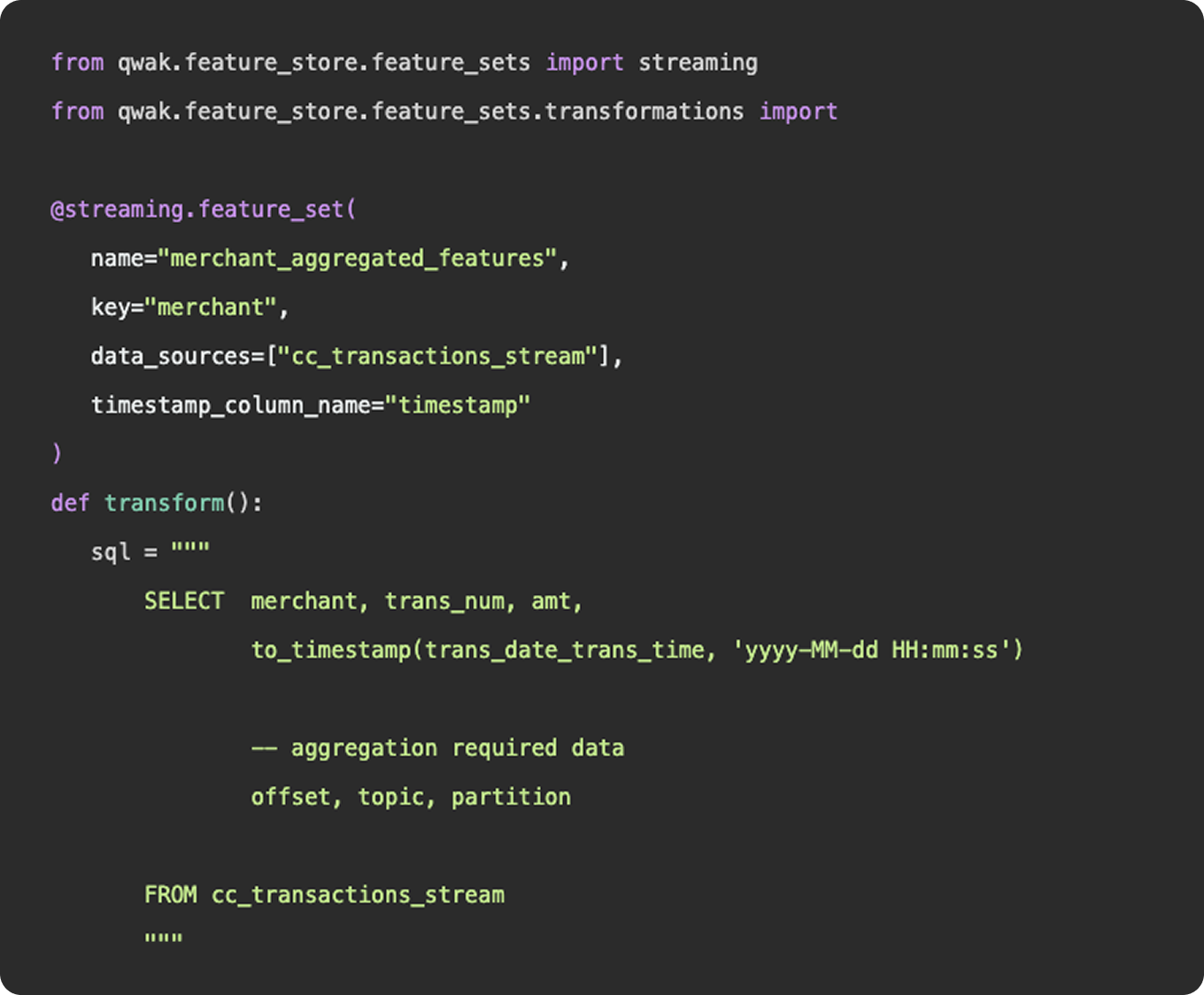
As we mentioned above, feature engineering is certainly a subset of data engineering. It involves the ingestion of data from a source, applying a series of transformations, and making the final result available to be queried by a model for training purposes. You can construct feature engineering pipelines to resemble data engineering pipelines, having schedules, specific source and sink destinations, and availability for querying. However, this configuration would only really apply once you have surpassed the experimentation stage and determined a need for a consistent flow of new feature data.
What is feature engineering
1. Functions
Functionally, there is nothing to differentiate data vs features - data points (link). Where feature engineering and data engineering really differ is in the objectives and motivations for constructing the pipelines. In general, data engineering serves a broader, more unified purpose than feature engineering. Data engineering platforms are constructed to be flexible and universal, ingesting various types and sources of data into a unified storage location where any number of transformations and use cases can be applied. The intent of a well constructed fact table or gold layer in a data lake is to provide a single source of truth that answers many different questions, produces many reports, and can be consumed by many downstream customers.
2. Practise
And in practice, an organization’s data engineering team will be responsible for the curation and maintenance of all data pipelines, not just those that relate to machine learning. These pipelines may power BI dashboards used by C-Suite, auditing reports that feed payroll, or event logs that show a user’s history of actions within the application.
Feature engineering, on the other hand, serves a specific purpose, finding the tailored inputs and columns that will generate the best predictive results for a machine learning model. Data scientists and machine learning engineers are not tasked with developing a universal data model that will ingest all data points throughout an organization, they just need to select, curate, and clean the data needed to power their models.
3. Machine learning
Now, as machine learning teams grow and begin to incorporate more and more data sources into their models, their feature engineering platform may start to resemble a larger data engineering platform in the tools and methodologies they employ. But, the intent is not to establish flexible data models that can be used throughout the organization - it is simply to power their machine learning models.